World Vitiligo Day • 25 June 2026
World Vitiligo Day 2026: Understanding Vitiligo, Breaking Myths & Expert Vitiligo Care in Chattogram
Every year on 25 June, World Vitiligo Day brings together patients, healthcare professionals, advocacy groups, and communities to improve awareness about vitiligo. Beyond education, the day reminds us that people living with vitiligo deserve dignity, compassion, and access to evidence-based dermatological care.
At DrSabinaDermatology.com, we believe awareness should lead to action. If you notice new white patches on your skin, early assessment by a qualified dermatologist can help establish the correct diagnosis and discuss appropriate management options.

Why World Vitiligo Day Matters
Although vitiligo affects millions of people worldwide, myths remain common. Some people still believe it is contagious, caused by food combinations, or linked to poor hygiene. These misconceptions often create unnecessary fear and social stigma.
World Vitiligo Day promotes:
- Public awareness
- Early dermatological consultation
- Evidence-based treatment
- Mental wellbeing
- Social inclusion and acceptance
What Is Vitiligo?
Vitiligo is a chronic autoimmune skin disorder in which the body’s immune system mistakenly targets melanocytes—the cells responsible for producing melanin, the pigment that gives skin its natural colour. As these cells lose function or are destroyed, white patches develop on the skin.
Vitiligo can affect people of any age, gender, or skin tone. It is not contagious and cannot spread through physical contact, sharing food, or living together.
Common Areas Affected
- Face
- Hands
- Feet
- Lips
- Around the eyes
- Scalp
- Arms and legs
- Genital region
Early Signs & Symptoms
- White or lighter patches of skin
- Premature whitening of scalp hair, eyebrows, eyelashes or beard
- Symmetrical depigmented patches
- Gradual increase in the size or number of patches
Not every white patch is vitiligo. Conditions such as fungal infections, post-inflammatory hypopigmentation and other pigment disorders may appear similar. Professional evaluation is therefore important.
Possible Causes & Risk Factors
The exact cause of vitiligo is not fully understood, but current evidence suggests a combination of autoimmune, genetic and environmental factors.
- Autoimmune activity
- Family history in some patients
- Genetic susceptibility
- Skin trauma (Koebner phenomenon)
- Oxidative stress
- Certain environmental triggers
Who Can Develop Vitiligo?
Anyone can develop vitiligo, including children and older adults. It affects both men and women and occurs in every ethnic group.
Expert Vitiligo Evaluation in Chattogram
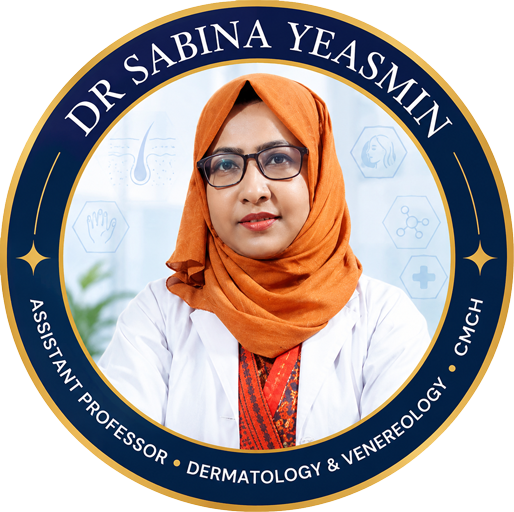
If you have recently noticed white patches on your skin, consult Dr. Sabina Yeasmin, Assistant Professor of Dermatology & Venereology, for a detailed assessment and individualized treatment plan.
- Clinical diagnosis
- Assessment of disease activity
- Evidence-based treatment planning
- Long-term follow-up and counselling
Common Myths About Vitiligo & Scientific Facts
| Myth | Scientific Fact |
|---|---|
| Vitiligo is contagious. | No. It cannot spread through touch, food, clothing or close contact. |
| Eating fish and milk together causes vitiligo. | No scientific evidence supports this belief. |
| Poor hygiene causes vitiligo. | Vitiligo is an autoimmune disorder and is unrelated to cleanliness. |
| Children of affected parents will definitely develop vitiligo. | Genetic predisposition may exist, but most patients have no family history. |
| There is no treatment. | Multiple evidence-based treatments are available depending on the patient. |
| Vitiligo is only cosmetic. | It can significantly affect confidence, emotional wellbeing and quality of life. |
| Vitiligo becomes cancer. | No. Vitiligo is not cancer and does not transform into cancer. |
Types of Vitiligo
Non-segmental Vitiligo
The most common form. White patches usually appear symmetrically on both sides of the body.
Segmental Vitiligo
Usually affects one side of the body and often begins at a younger age.
Localized Vitiligo
Limited to one or a few small areas.
Universal Vitiligo
A rare form involving extensive depigmentation across much of the body.
How Vitiligo Is Diagnosed
A dermatologist usually diagnoses vitiligo through:
- Detailed medical history
- Clinical skin examination
- Wood’s lamp examination when appropriate
- Assessment for associated autoimmune conditions when indicated
- Additional tests only if clinically necessary
Early evaluation helps distinguish vitiligo from fungal infections, post-inflammatory hypopigmentation and other pigmentary disorders.
When Should You Consult a Dermatologist?
- New white patches appear suddenly.
- Existing patches are increasing in size.
- Hair within patches turns white.
- A child develops unexplained white patches.
- You have previously been diagnosed but notice progression.
Why Early Treatment Matters
Although every patient responds differently, timely assessment may help identify disease activity, select appropriate treatment options and improve long-term management.
- Confirm diagnosis early
- Rule out similar skin conditions
- Discuss individualized treatment goals
- Monitor disease progression
- Receive counselling on skin care and sun protection
Book an Expert Vitiligo Consultation
Dr. Sabina Yeasmin provides evidence-based evaluation and individualized management for patients with vitiligo and other pigmentary disorders in Chattogram.
Vitiligo Treatment Options
Treatment is individualized. The choice depends on the patient’s age, disease activity, extent of skin involvement, affected body sites, and overall health. Early consultation allows a dermatologist to determine the most appropriate management plan.
Topical Medications
- Topical corticosteroids in selected patients
- Topical calcineurin inhibitors for appropriate areas
- Other evidence-based therapies when indicated
Narrowband UVB Phototherapy
Narrowband UVB (NB-UVB) is one of the most established treatment options for widespread or progressive vitiligo and may promote repigmentation in suitable patients.
Excimer Light / Excimer Laser
Localized vitiligo may benefit from targeted light therapy depending on lesion location and clinical assessment.
Surgical Treatment
For carefully selected patients with stable vitiligo, surgical procedures such as grafting techniques may be considered after specialist evaluation.
Cosmetic Camouflage
Camouflage products can improve appearance and confidence while medical treatment is ongoing.
Daily Skin Care Recommendations
- Use broad-spectrum sunscreen on exposed skin.
- Avoid unnecessary skin trauma where possible.
- Follow your prescribed treatment consistently.
- Attend scheduled follow-up appointments.
- Discuss any new patches promptly with your dermatologist.
Why Choose Dr. Sabina Yeasmin?
Patients seeking assessment for white patches and pigmentary disorders benefit from evidence-based dermatology care focused on accurate diagnosis, individualized treatment, and long-term follow-up.
- Assistant Professor of Dermatology & Venereology
- Clinical experience in skin, hair and nail disorders
- Patient-centred consultation
- Evidence-based management
- Focus on education and long-term care
Serving Patients Across Chattogram
Patients visit from Agrabad, Halishahar, Panchlaish, Chandgaon, Patenga, EPZ, Kotwali, GEC, Khulshi and surrounding areas for evaluation of vitiligo, white patches and other dermatological conditions.
This page is intended to help people searching for:
- Vitiligo treatment in Chattogram
- White patches on skin specialist
- Vitiligo dermatologist near me
- Skin specialist for pigment disorders
Book Your Consultation
If you notice unexplained white patches or have previously been diagnosed with vitiligo, schedule a consultation for an expert assessment and personalized management plan.
Frequently Asked Questions
Is vitiligo contagious?
No. Vitiligo cannot spread through touch, food, or close contact.
Can children develop vitiligo?
Yes. It can occur at any age.
Is vitiligo hereditary?
A genetic tendency exists in some patients, but many have no family history.
Can vitiligo be treated?
Yes. Several evidence-based treatment options are available depending on the individual.
Is vitiligo painful?
Usually no, although its emotional impact can be significant.
Does stress cause vitiligo?
Stress is not considered a direct cause but may influence disease activity in some people.
Should I use sunscreen?
Yes. Sun protection is recommended because depigmented skin is more sensitive to UV exposure.
Can white patches always mean vitiligo?
No. Other skin conditions can also cause white patches.
Can vitiligo spread?
It may remain stable or progress depending on the individual.
When should I see a dermatologist?
Whenever new white patches appear or existing lesions change.
Related Dermatology Services
- Vitiligo Evaluation & Treatment
- Psoriasis Treatment
- Eczema Management
- Acne Treatment
- Hair Loss Consultation
- Nail Disorder Treatment
- Skin Allergy Evaluation
Related Educational Articles
- Common Causes of White Patches on Skin
- How to Protect Sensitive Skin from Sun Damage
- Understanding Autoimmune Skin Diseases
- When Should You Visit a Dermatologist?
Book Your Appointment
If you are concerned about white patches on your skin, consult Dr. Sabina Yeasmin for an expert dermatological evaluation and a personalized management plan.
About Dr. Sabina Yeasmin
Dr. Sabina Yeasmin is an Assistant Professor of Dermatology & Venereology at Chattogram Medical College Hospital. She provides evidence-based care for skin, hair, nail and pigmentary disorders, including vitiligo.
Medical Disclaimer
This content is intended for educational purposes only and should not replace professional medical advice, diagnosis or treatment. Individual results may vary. Consultation with a qualified dermatologist is recommended.